
AI Music in Aisle 5? Why Synth Beats Might Be Replacing Your Favorite Jingles
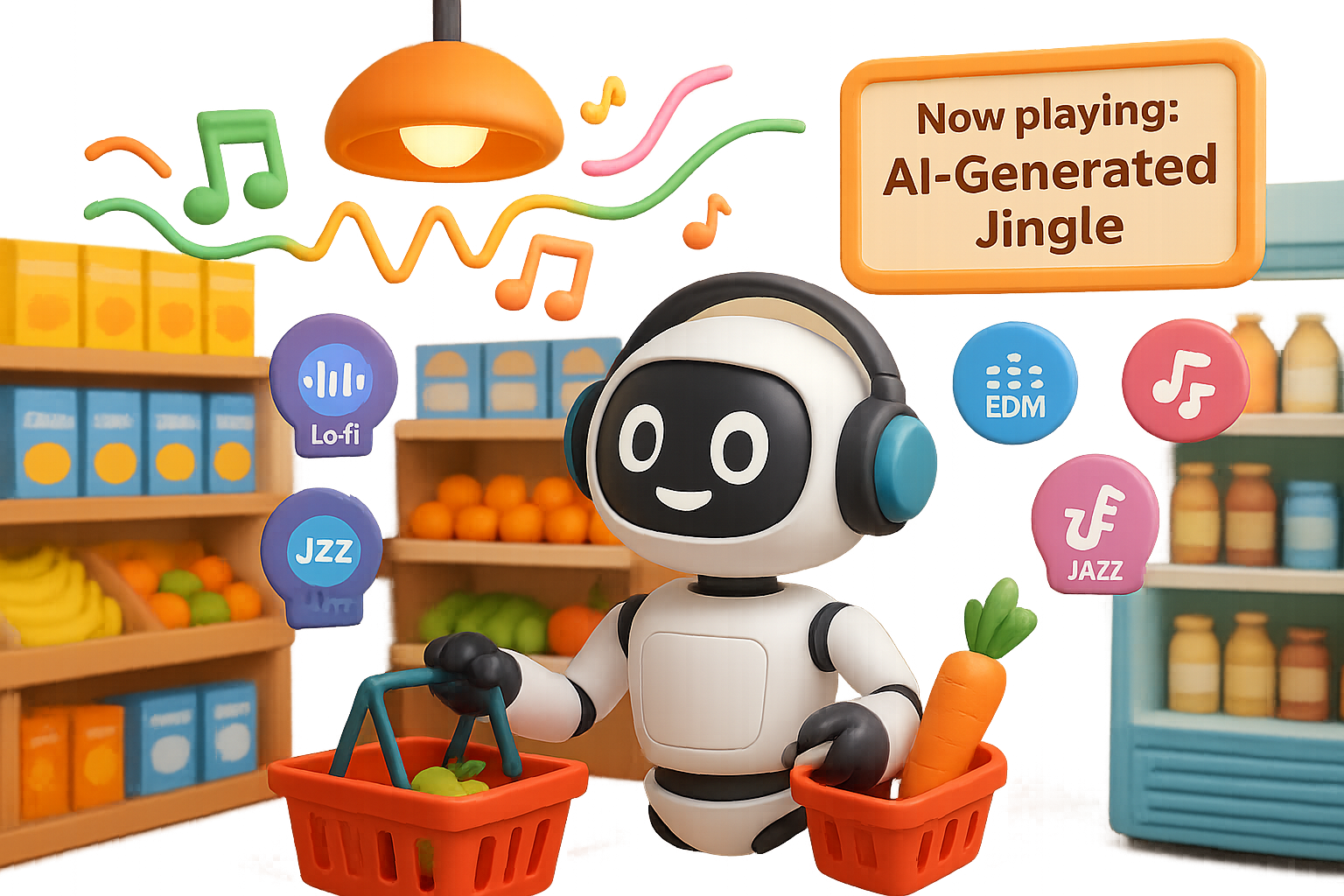
That catchy tune echoing through your local supermarket? It might not be Taylor Swift anymore—it could be a custom AI-generated track casually reminding you that apples are 20% off.
This isn’t sci-fi. It’s Belgium.
Supermarkets and hardware stores across the country are swapping chart-toppers for algorithmic beats. One national chain tested this across 150 stores. Another? Over 700. Their goal: playlist power with no strings—and no royalties—attached.
Let’s break down what’s happening, what it means for you (yes, you), and what it spells for artists, marketers, and that awkward hum-along moment in the cereal aisle.

No Labels, No Licenses: Why Retailers Are Hitting “Generate”
Traditionally, playing music in public means paying for it. Retailers cough up licensing fees to keep your shopping trip soundtracked. But with generative music tools in play, business owners now get to:
- Cut royalty costs to zero – AI music = no performance fees. That’s a line-item win.
- Generate fresh playlists on demand – “Lo-fi chill for makeup aisle” or “EDM with summer vibes” happens with one prompt.
- Embed promos right in the lyrics – Yes, these songs can literally sing about toothpaste discounts.
- Stay legally clean – They even run songs through Shazam to make sure there’s no accidental remix of a Weeknd hit.
It’s fast. It’s cheap. And it’s surprisingly listenable.

What Does AI Music Actually Sound Like?
Think: chill synths, elevator pop, ambient jazz. Modern platforms like Boomy, Loudly, Soundraw, and AIVA generate full tracks—including hooks and harmonies—in literal seconds.
One prompt we tried: “Up-tempo electronic track about cybersecurity and hackers.”
What came back? A passable dance beat with lyrics about firewalls and passwords.
Not quite Grammy-worthy—but totally passable for background music while you debate oat milk brands.

For Retailers, It’s a Goldmine of Possibilities
Here’s where this gets wild (and a little genius):
- Personalized jingles – You can literally have your store’s name and promo baked into the playlist.
- A/B testing, music edition – Want to know if upbeat tracks make people buy more wine? Change the key or tempo and measure reactions.
- Seasonal soundtracks, zero hassle – Sleigh bells this month, bossa nova next. All done without re-negotiating a single license.
It’s like controlling Spotify for your store, but with coupons in the chorus.

But Artists? Yeah—they’re Feeling It
Let’s be real: not everyone’s clapping.
- Fewer royalties = smaller paychecks for real-life musicians.
- More “meh” music = a diluted creative landscape.
- Audio ads on steroids – The thought of being serenaded by a jingle about eggs in every aisle? Yah, kinda intense.
There’s also the existential gut-punch: when anyplace with a speaker can generate original music, the line between “artist” and “algorithm” blurs fast.

Will Shoppers Even Notice?
That’s the twist.
Most folks already stream AI-generated lo-fi to focus or sleep. So background music blending into…well…background might not raise eyebrows.
But things change when lyrics start pushing products. Heard a voice sing “Buy two, get one free on frozen pizza”? You’d probably tune in. Maybe even cringe.
Here’s the bigger question: Should stores label this content as AI-generated? And at what point does helpful turn into intrusive?

Where the Human Touch Still Wins
Don’t count musicians out just yet.
AI can flirt with melody, but some parts of music—it still can’t fake.
- Real storytelling – Cultural nuance, hard-earned emotion, insider references: algorithms aren’t there yet.
- Live shows & improv – A bot won’t switch up its setlist mid-song based on crowd energy.
- That messy, magical connection – Fans don’t just follow songs. They follow artists, quirks and all.
Emotion doesn’t always compute.

What Smart Artists Are Doing Instead
Instead of fighting the bots, some creatives are partnering with them. Here’s how:
- Sketch ideas faster – Let AI draft a baseline. Then punch it up with real-world soul.
- Sell custom snippets – Offer brands AI-assisted tracks for ads while keeping your main body of work untouched.
- Co-create with fans – Fans remixing your songs with guided AI tools? That’s a vibe. And a new revenue stream.
In short, AI doesn’t replace your voice—it helps build more megaphones.

What Happens Next?
Belgium may be the test kitchen, but the menu’s expanding.
Expect AI-curated playlists in:
- Hotel lobbies
- Airport walkways
- Fitness centers
- Even amusement parks
Regulations might catch up eventually. But for now, retailers are running with it. Why? Because it saves money, sounds fine, and helps sell mangoes.

The Takeaway
Whether you’re an artist, a marketer, or a casual hummed-along-with-the-stereo shopper, the soundtrack of everyday life is shifting. Fast.
AI won’t kill music. But it’s definitely remixing it—and retail is just the first dancefloor.
Want to explore this tech without burning out on buzzwords?
Check out Tixu – a beginner-friendly platform that helps you actually learn how AI works, not just what it can do.
Ready when you are.

Leave a Reply