
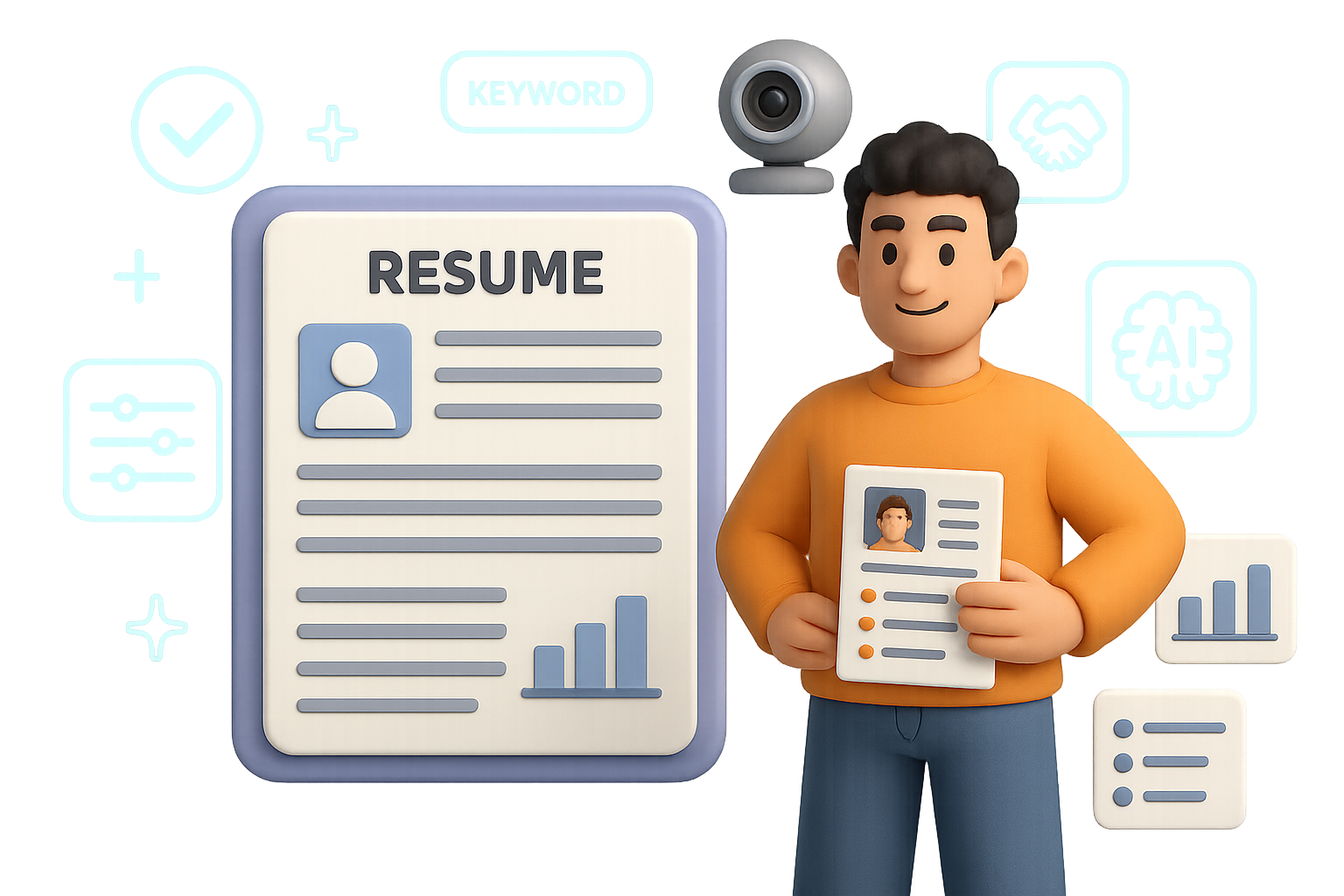
Beat the Bots: How to Apply for Jobs in the Age of AI
The robots aren’t coming for your job—yet. They’re coming for your application.
Hiring teams now rely on Applicant Tracking Systems (ATS) and AI-driven video interviews to sift through résumés in record time. That dream role? It might be getting blocked by a filter, not a recruiter ghosting you.
Here’s the good news: once you understand how these systems think, you can turn the game to your advantage.
In this guide, you’ll learn how to:
- Fix résumé black holes
- Nail AI-screened interviews
- Use AI tools without sounding like, well, a robot
Let’s get you back in the yes pile.

Why Your Applications Keep Disappearing
You send in your résumé… and never hear back. Sound familiar?
Most people assume it got deleted by some soulless algorithm. But here’s the twist: a human does eventually read your application—if it makes it that far.
Here’s the play-by-play:
- A job post goes live.
- An ATS spreads it across sites like LinkedIn and Indeed.
- Your beautifully formatted résumé? Stripped into plain text.
- “Knock-out” questions (like work eligibility) cut the pile fast.
- The system scores the survivors based on skills and keywords.
- Only the top 5–10% reach a recruiter’s desk.
The real problem? You’re not invisible. You’re misaligned.
Want more callbacks? Align your résumé to what the job actually asks for. One tailored application beats 20 generic ones, every time.

Step 1: Take Radical Ownership of Your Résumé
Forget hacks like hiding keywords in white text. The algorithms are smarter than that—and so is the person reading on the other end.
Here’s what actually works:
- Lead with a headline. Show value fast (“Operations Manager who builds scalable playbooks for 7-figure teams”).
- Quantify everything. Numbers build trust. Did you cut churn? Boost engagement? Add a % or dollar sign.
- Address hard requirements. If the job mentions “Tableau + SQL,” those exact tools should appear clearly (and truthfully) in your experience.
Write for the reader. But use the language machines expect.
Tailor each résumé like it’s a product page. Because it kind of is.

Step 2: Master AI-Based Video Interviews
Smile—you’re on algorithmic camera.
Platforms like HireVue and SHL are now screening first-round interviews. They analyze what you say and how you say it.
To ace the format:
- Stay role-specific. Skip vague answers. Highlight wins aligned to the job.
- Use structure. Go STAR: Situation, Task, Action, Result. It keeps you tight and on-message.
- Bring energy. AI tools pick up on tone, eye contact, and pace. Sounding robotic? Irony alert—you’re done.
- Practice on lens. Record a few responses, review, and tweak. Just three practice sessions can seriously boost delivery.
If you wouldn’t sit across from a hiring manager and talk like that, don’t send it to the bots.
Your webcam is the new first impression.

Step 3: Make AI Your Secret Weapon
AI won’t replace you—someone better at using AI might.
Instead of fearing the filters, start using them to your advantage:
- Bullet point brainstorms: Use ChatGPT to tighten phrasing, but feed it real wins, not fluff.
- Résumé matchers: Tools that evaluate how well your résumé fits a job post help you tweak smarter.
- Interview simulators: Platforms that mirror HireVue help you prep with targeted insights—voice, pace, even eye movement.
- Job discovery engines: Some platforms surface roles you wouldn’t find on the usual job boards—and connect you directly with growing teams.
Just don’t copy-paste lazy prompts into your résumé. That’s not automation—it’s sabotage. AI should amplify you, not erase you.

Final Take
Tech is changing how you get hired. But it’s still people who make the call.
Here’s your edge:
- Own your message.
- Practice like it’s stage time.
- Use AI like a tool—not a crutch.
You’ve got the story. Time to package it right.
👉 Ready to learn the smart side of AI? Tixu makes it beginner-friendly.

Leave a Reply