
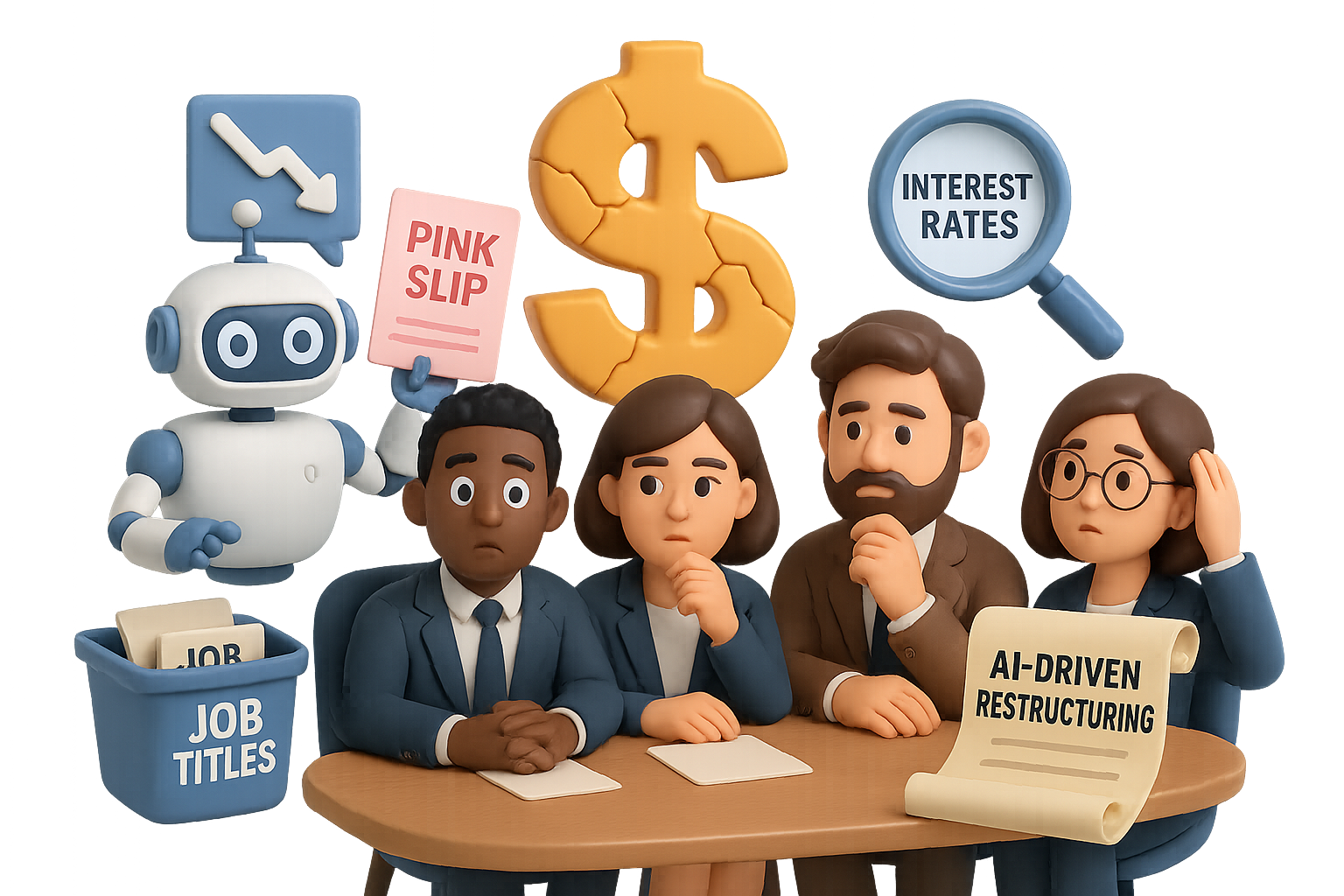
Is AI Really Behind the Layoffs? Let’s Not Get “Washed”
If you’re watching the headlines right now—“Another 10,000 jobs cut,” “Tech downsizing continues”—you’d be forgiven for wondering: Is AI coming for your job?
Between January and September 2025, U.S. employers announced close to one million job cuts—up 55% from the same stretch last year. With every tech exec whispering “AI” into investor calls, it feels like machines are pulling the rug out from under people.
But here’s the twist: AI isn’t the villain behind most of these pink slips. It’s something murkier—and it starts with a little thing called “AI washing.”

Don’t Fall for the AI Cover Story
You’ve heard of greenwashing. Now meet its shinier sibling.
Corporate leaders have discovered that sprinkling AI into press releases can soften bad news. Downsizing a team? Say it’s for “AI-driven efficiencies.” Slashing a department? Blame “automation.” Never mind that the change was driven by interest rates, not robots.
This PR game has a name: AI washing.
A recent survey showed 79% of U.S. CEOs worry they’ll be ousted within two years if they don’t show visible AI wins. That pressure leads to headlines like “Restructuring for the AI era”—even when the AI part is, let’s say, generous.
Just ask your marketing team that’s playing with ChatGPT prompts. Does that count as “transforming operations through generative AI”? Technically, sure. Strategically? Not so fast.

AI Isn’t (Yet) a Silver Bullet for Savings
Replacing people with code sounds efficient. In reality? It’s a beast of a lift.
Here’s what companies run into once the AI hype hits real-world ops:
- Complex systems
Company data lives across legacy platforms, random spreadsheets, and half-forgotten databases. Integrating it securely takes time—and budget. - Massive change management
People still matter. Workflows must be redesigned. Training is key. Compliance teams need convincing. You don’t install AI like an app. - Regulatory curveballs
From ethics to liability, legal gates slow everything down. One biased model can trigger a PR mess—or worse, a lawsuit. - New skill sets are non-negotiable
You still need people—data scientists, prompt engineers, domain experts—to run and refine AI systems.
That’s why even aggressive adopters like Meta have been slow to “replace” jobs wholesale. When they cut 600 roles in late 2025, it wasn’t due to AI efficiencies. The team had just grown too large.
The data backs this up: There’s little evidence that AI is eliminating large swaths of jobs today. The real story? A shift in how work happens, not who’s doing it.

So What’s Actually Fueling These Layoffs?
Strip out the headlines and you’ll find some good old-fashioned economics:
- High interest rates force cost-cutting across the board
- Weaker demand triggers resizing, especially in consumer-facing sectors
- Corporate bloat built up during boom years finally gets trimmed
- Recession fears spark preemptive cuts, even without an actual downturn
In fact, over-cutting can backfire. Research shows companies that resist layoffs often recover faster—they save on rehiring and retain more institutional memory.
AI is the buzz. But budget anxiety? That’s the actual driver.

What This Means for You and Your Team
Let’s talk moves. If you want to stay a few steps ahead, here’s where to focus:
- Stay skeptical of AI-blamed layoffs
Ask: What’s the full picture? Revenue, market conditions, internal missteps—don’t let buzzwords distract from real factors. - Build your AI complement, not your clone
Roles heavy on routine tasks are more prone to automation. But creativity, judgment, and collaboration? Still very human. - Champion smart adoption
If your team is eyeing AI tools, start with real problems, clean data, and measurable outcomes. Press-release projects rarely move the needle. - Watch for productivity gains, not headcount halts
The near-term win is likely amplifying your team’s output—not replacing it altogether.

Final Thought: Don’t Let the Noise Distract You
AI isn’t replacing swaths of workers overnight. It’s not coming for your badge—unless someone better at using it does.
The bigger threat might be ignoring the tech entirely. Because while the job cuts may not be AI’s fault, the opportunities sure are AI-enabled.
So make peace with the rise of smart tools—but don’t take every headline at face value. Focus on making your work AI-resilient, and you’ll be the one shaping the future, not scrambling to catch it.
Ready to upskill for the AI era?
Check out Tixu—a beginner-friendly platform to learn practical AI tools without the jargon.

Leave a Reply