
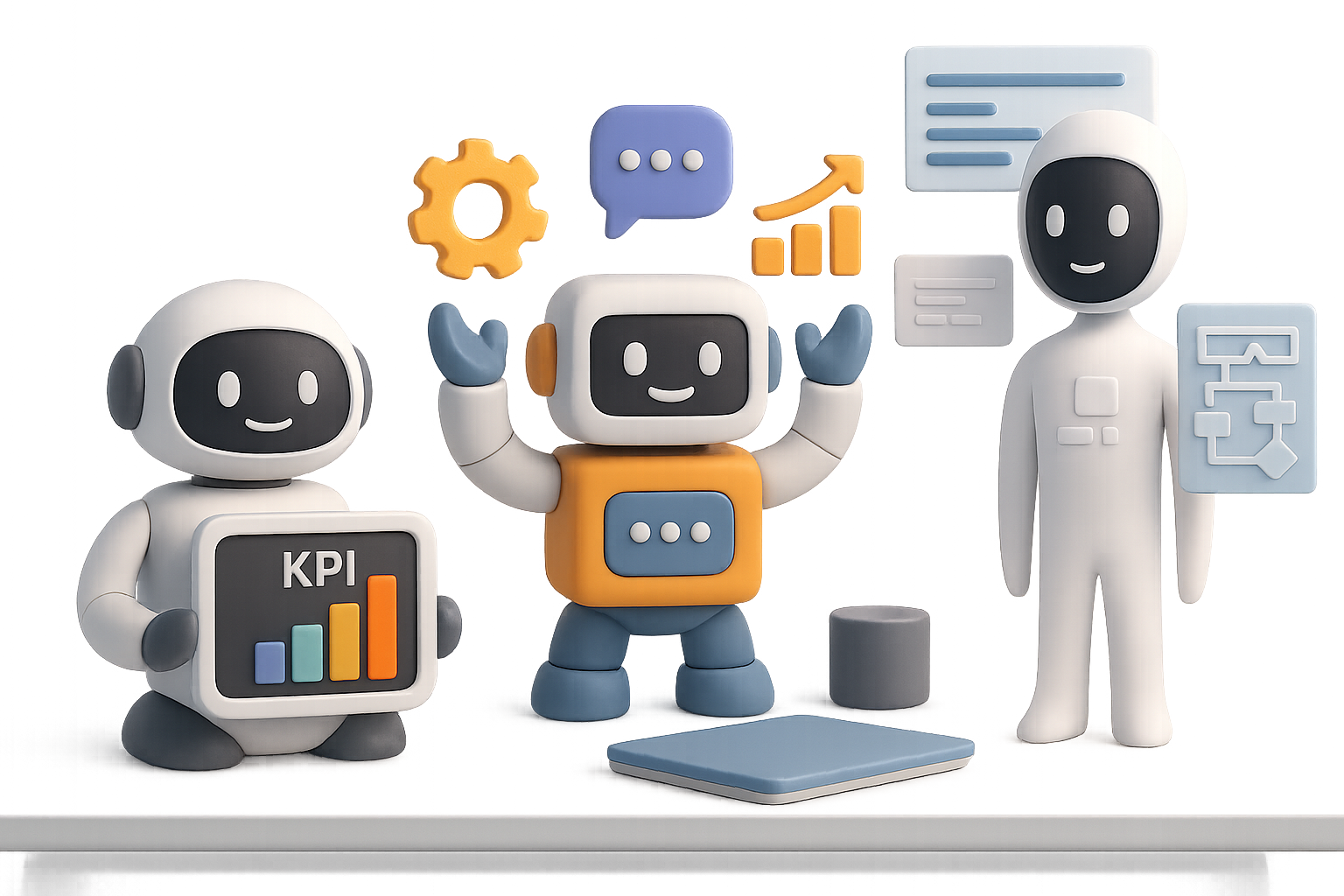
Meet Your New Digital Workforce
Your competition just hired someone who never sleeps, works 24/7, and doesn’t ask for benefits. Spoiler alert: it’s not a person—it’s an AI agent.
Let’s be clear: we’re not talking about those FAQ-toting chat widgets we’ve all ignored. This is something way sharper. Think digital employees who can scan the web, learn on the fly, and make smart business calls without burning out—or billing overtime.
Ready to bring one onboard?
In this post, you’ll see:
- What AI agents actually do
- Where they create value fast—for real businesses like yours
- Tools you can use today
- A peek at the next decade and why this shift is bigger than you think

The Brains Behind the Bot
AI agents don’t just sit around waiting for prompts. They act with purpose.
Here’s the basic loop they follow:
- Perceive – Pull in live data from web sources, internal systems, sensors—whatever they’re plugged into.
- Process – Convert that mess into structured, searchable knowledge.
- Decide – Use logic, stats, or even large-language-model smarts to figure out the next best move.
- Act (and Learn) – Take action, track results, then tweak the plan for next time.
That loop runs nonstop. Agents don’t wait for direction—they learn, adapt, and keep pushing.
Big upgrade from spreadsheets and Slack pings, right?

Where They Crush It Right Now
AI agents shine where speed, scale, and smart decision-making matter. Here’s where they’re already adding value—no futuristic speculation required.
- Trend spotting & product ideas
Fashion chain? No need to assign interns to doomscroll TikTok. Agents spot rising hashtags, sync them with your sales data, and suggest new SKUs before the trend even hits shelves. - Dynamic pricing
Selling electronics or fast-moving inventory? Agents monitor your competitors’ prices and auto-update yours in real-time. No more pricing meetings—just margin protection on autopilot. - Supply-chain triage
Shipment stuck in customs? While you sleep, your agent flags the problem, suggests a workaround carrier, and updates the PO routing. Boom—flames out, before you even clock in. - Customer support & lead capture
Not just instant answers—agents can collect names, emails, and phone numbers, then feed it directly to your CRM. It’s like having a hustling SDR who never misses a call.

The Three Agent Types You Should Know
Not all AI agents do the same thing. Think of these like positions on your dream tech-powered team.
1. Goal-based agents
Point them at a KPI—say, “reduce support wait time under 2 minutes.” They figure out how to hit it. Conversation flows, knowledge base tweaks, escalation logic—it’s all on the table.
2. Utility agents
Your behind-the-scenes MVPs. They rejig staff rosters, fine-tune your ad account, balance out stock levels. A sharp upgrade from “set-and-forget” dashboards.
3. Autonomous agents
These are the heavyweights. They break down complex goals, delegate subtasks, learn from outcomes, and steer the whole workflow from end to end. Think management consultant meets ops lead—with none of the billing hours.
Quick sidebar: There are lighter-weight agents too—reflex agents (reactive) and learning agents (get better every run). Perfect for simple inputs like sorting emails or flagging fraud.

Want to Try One Today?
Here are two tools you can spin up in under an hour—no engineering degree required.
Custom Lead-Capture Chatbot
Several platforms now let you:
- Drop a single script tag on your site
- Upload your product catalog, FAQs, or policies
- Instantly launch a chatbot that handles questions and asks visitors for contact info
Example: Someone asks, “Do you sell Magic: The Gathering singles?” Your agent replies “Absolutely! Here’s our inventory,” plus “Want me to text you the latest arrivals?” That lead? Already in your CRM.
AgentGPT
You type: “Build a marketing plan for my teeth-whitening kit.”
It responds by:
- Mapping out steps – research → positioning → channel plan
- Finding real competitor and audience insights
- Executing and tracking progress
It’s like hiring a strategist, project manager, and researcher—all in one tab.

Why This Isn’t Just a Tech Trend
NVIDIA’s CEO called AI the “third industrial revolution.” That’s not hype—it’s direction.
Large-scale manufacturing changed labor. The internet changed commerce. AI? It’s about to redefine decision-making, productivity, and scale.
And for small businesses that means:
- Faster output without extra headcount
- Lower costs per task
- Smarter calls—based on real-time signals, not last quarter’s feedback
- Always-on customer service that actually delivers
- Human teams freed up for what only humans can do—like innovation and empathy
This isn’t “someday.” It’s live now.

Quick Recap
AI agents aren’t side projects—they’re your next ops hire, customer rep, or strategy intern. The best part? You don’t even need to build one from scratch.
Start focused:
- Lead capture on autopilot?
- Smart pricing updates?
- Logistics rescue missions?
Then tune, stack, and evolve over time. The payoff? Compound efficiency with fewer blockers and better margins.
Want a beginner-friendly place to start learning how these agents tick—and how to actually use them?
👉 Check out Tixu.ai – it’s built for humans (not engineers), and gets you up to speed fast.

Leave a Reply