
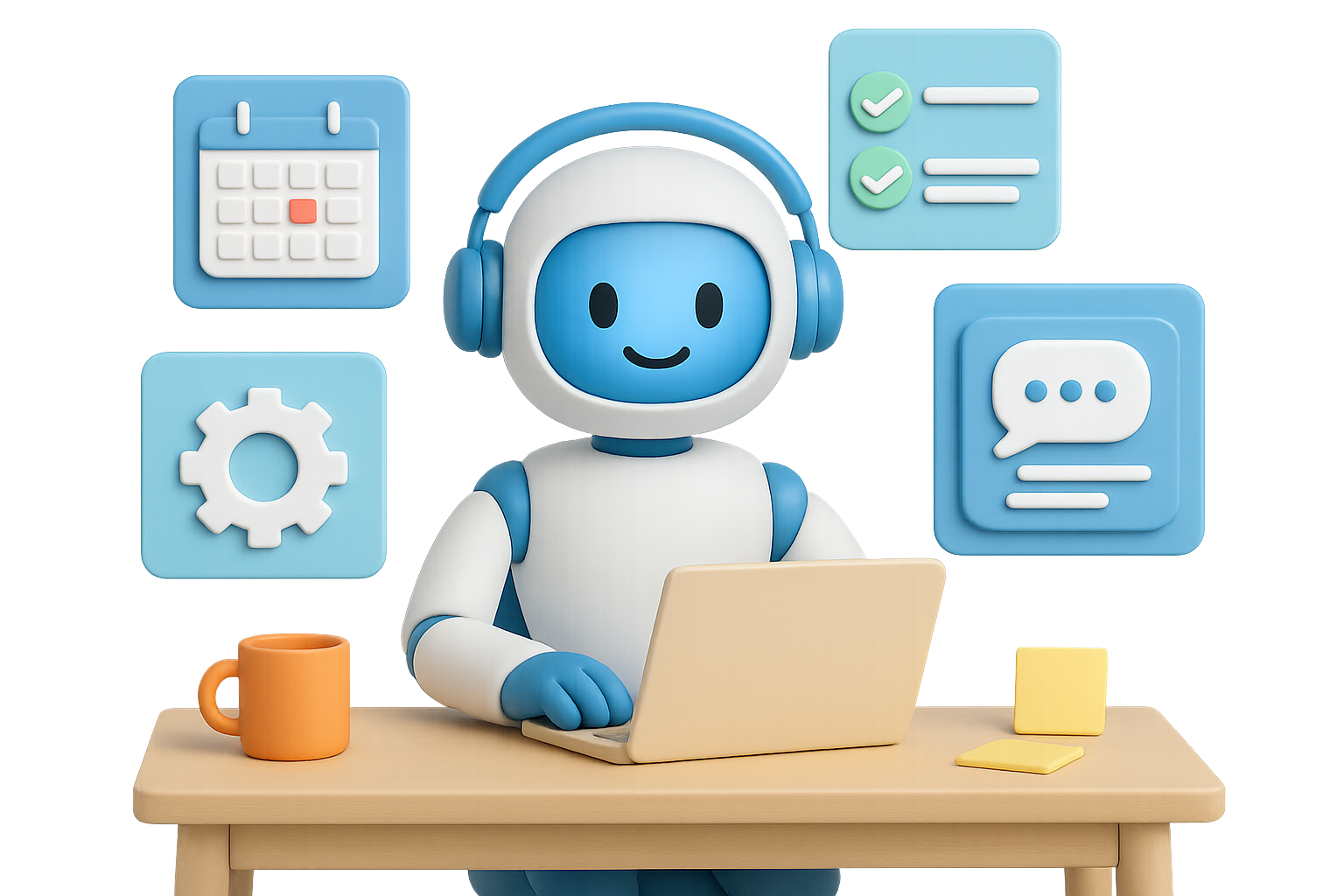
What Exactly Is an AI Agent?
You’ve probably heard the buzz around “AI” before—artificial intelligence, brilliant but kinda passive. Think of it as brainpower without hands. Now imagine giving that brain a job and watching it work without you lifting a finger. That’s an AI agent.
It’s the jump from “Wow, it knows stuff” to “Whoa, it just handled that for me.”
Let’s unpack what an AI agent really is—and how it starts pulling its weight.

From Book Smarts to Getting Stuff Done
Here’s the flip:
- AI = brainpower
- AI agent = smart helper that understands, plans, and acts
While plain old AI can analyze or generate content, an AI agent takes action. You ask it something, it responds and follows through—bookings, reminders, repetitive tasks? Done and dusted.
You get results, not just recommendations.

How AI Agents Work: The 3-Part Move
Behind the scenes, every agent runs the same quick-fire routine:
- Understand – It takes in your input (text, voice, click—whatever).
- Think – It decides what to do based on rules or prompts.
- Act – It executes the task, whether that’s replying, scheduling, or sending data somewhere.
It all happens in seconds. And with every interaction, it learns a little more.

Yes, It Needs Some Training Wheels (At First)
Think of setting up an agent like prepping a new babysitter.
You leave a list, right? “Snack is carrots. No scary movies. Call if the dog acts weird.” Same goes for AI agents.
- Some are pre-trained—great for basics like support or reminders.
- Others are custom-built to follow your style, preferences, or workflows.
Once it’s got its marching orders, it can handle the routine—and let you handle what only you can.

What You See (and Don’t) in an AI Agent
From your side, it’s beautifully simple: a chat box, maybe a button, or a voice prompt.
But under the hood? It’s working through a smart decision tree:
- Input – You trigger it somehow.
- Processing – It figures out what you want, pulls info, checks instructions.
- Action – Task done. Email sent. Form filled. Problem solved.
- Learning – It updates its brain for a smarter next round.
You don’t need to see the wires—just enjoy the output.

Why This Matters (Especially If You Run a Business)
Let’s get specific. AI agents aren’t tech toys—they’re time-reclaiming machines.
- Answer customer questions 24/7, no extra hires
- Handle bookings and reminders without a human inbox choke point
- Draft and send invoices, follow up automatically
- Whip up marketing messages personalized to each user
Bottom line? You get hours back. Use them to scale up, think creatively, or just breathe.
Laggards will scramble later. You’ve got the chance to lead now.

“There’s an Agent for That”
Remember typing “There’s an app for that” back in the smartphone boom? We’re now stepping into the “There’s an agent for that” world.
- Want to move $200 to savings after each paycheck?
→ Agent can handle it. - Need your meds reordered every 30 days?
→ Done. - New task in Slack turns into a sprint plan in Jira?
→ Auto-magic.
Soon, you might have a dozen agents managing your digital life—quietly, efficiently, endlessly.

Try This This Week
Ready for a toe-dip into AI agents? Start simple:
- Write down 3 repetitive tasks you do weekly (copy-paste jobs = gold mine).
- Google an agent-ready tool for one of them (Zapier, Notion AI, or your CRM).
- Set up a small task (auto-response email, recurring slack reminder).
- Track how much time it saves. Then build from there.
Bonus: once you succeed with one agent, the rest will feel like easy wins.

The Wrap-Up
AI agents are like having a digital sidekick who never sleeps, forgets, or procrastinates. They understand, think, and act—so you don’t have to babysit every task. Whether you’re running a business, freelancing, or managing daily chaos, they free you up to work smarter (or enjoy lunch without checking your phone).
Want to start learning how to build and use smart agents—without needing a computer science degree?
👉 Check out Tixu—a friendly platform built for curious beginners who want to dive into AI minus the headache.

Leave a Reply