
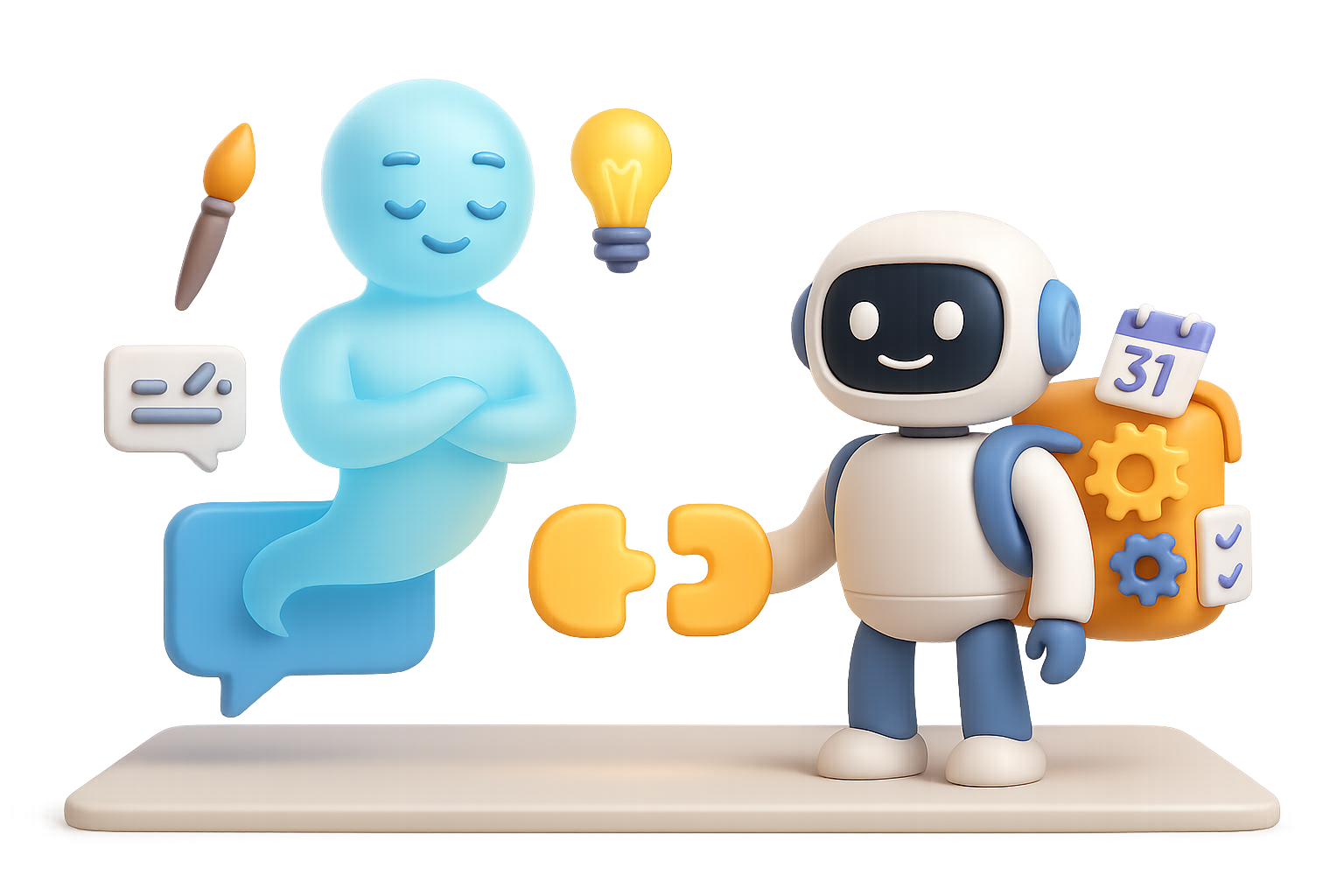
Generative vs. Agentic AI: Pick the Right Tool for the Job
You’ve probably played with ChatGPT or dabbled in AI art. Maybe you’ve even whipped up some code snippets on the fly. But now there’s a new flavor of AI on the scene—one that doesn’t just respond, it acts.
Welcome to the next evolution: agentic AI.
This post will walk you through the real differences between generative AI and agentic intelligence—why they matter, when to use them, and how they’ll change the way you get stuff done.
Let’s break it down.

You Already Know Generative AI (Even If You Don’t Know the Name)
Think: chatbots. Image generators. Auto-complete tools for emails, blogs, or code.
That’s generative AI. It’s reactive—like a genie in a bottle. Ask the right question, and it sparks into life.
Here’s how it works:
- You give it a prompt.
- It predicts “what comes next” using patterns from its training.
- It outputs a result—text, a picture, a song, code—and… done.
Familiar territory, right?
What Generative AI Can Spin Up
- Blog posts, email drafts, product descriptions
- Images, video frames, album covers
- Code snippets or full functions
- Audio or music samples
Technically, Large Language Models (LLMs) handle text, while something called “diffusion models” support visuals and audio. But you don’t need to memorize the lingo—just know this:
Generative AI is stunningly good at idea bursts, but it still needs you to push the project forward.

Agentic AI: From Spark to Self-Starter
Now flip the script.
What if AI didn’t wait on your every prompt—but instead worked alongside you, pursuing a goal step by step?
That’s agentic AI.
It takes the brains of generative tools and bolts on the ability to act, learn, and adjust over time. Think of it as your AI intern—only this one scales, iterates, remembers, and never sleeps.
Meet the Agentic Workflow
Here’s a peek under the hood:
- Perceive – Watch what’s going on (read data, check a dashboard, scan emails)
- Decide – Choose the next logical step
- Execute – Take action (book a meeting, send a message, call an API)
- Learn – Check the outcome, improve its next move
- Repeat – Until the job’s done or you step in
This isn’t just neat; it’s game-changing.
When repetitive workflows meet autonomy, things get really efficient:
- A personal shopping agent compares prices, detects back-in-stock alerts, handles checkout, and schedules delivery.
- A social-media manager drafts, analyzes, A/B tests, and optimizes posting—all while you sleep.
- A virtual event planner coordinates logistics, budgets, and RSVPs—without endless spreadsheets.
Got Reasoning? Chain-of-Thought, Explained
One secret weapon behind agentic AI? It doesn’t just spit out answers—it thinks through why.
The fancy term is chain-of-thought, and it lets tools outline logic before making decisions.
Picture an agent tackling a conference:
- Define the size, venue needs, and budget
- Find possible locations
- Check availability
- Send options for approval
- Confirm bookings and pay deposits
Each bullet is a thought. It’s also a task. And the AI keeps moving without a nudge.

Here’s the Quick Comparison
🧠 Generative = Reactive Creation
- Spark content: blog ideas, code snippets, visuals
- You call the shots at each step
- Great for brainstorming and rapid drafts
🤖 Agentic = Proactive Execution
- Takes multi-step action toward a goal
- Works with minimal supervision
- Perfect for handling workflows, not just words

Creators, Meet Your New Dream Team
Here’s where things get spicy.
The future? It’s not either/or—it’s yes.
Imagine writing a children’s book overnight (generative)… and letting your agentic AI handle the illustrations, email beta readers, and post a teaser video before your morning coffee.
That’s not sci-fi. It’s happening now.
Because generative AI dreams, agentic AI delivers. Together, they build something bigger than either could alone.
What This Means for You
Whether you’re:
- Writing ad copy
- Building user flows
- Managing content calendars
- Automating business ops
… knowing when to use a reactive creator vs. a proactive helper is your edge.
Because choosing the right AI isn’t just about what it can do—it’s about what you need done.
Want to See It in Action?
We built Tixu to be your go-to platform for learning AI from the ground up—no jargon, no gatekeeping, just hands-on growth.
If you’re ready to explore what both generative and agentic tools can do for you, head to Tixu’s official website to get started.
You’ve got the vision. Let AI help you deliver.

Leave a Reply