
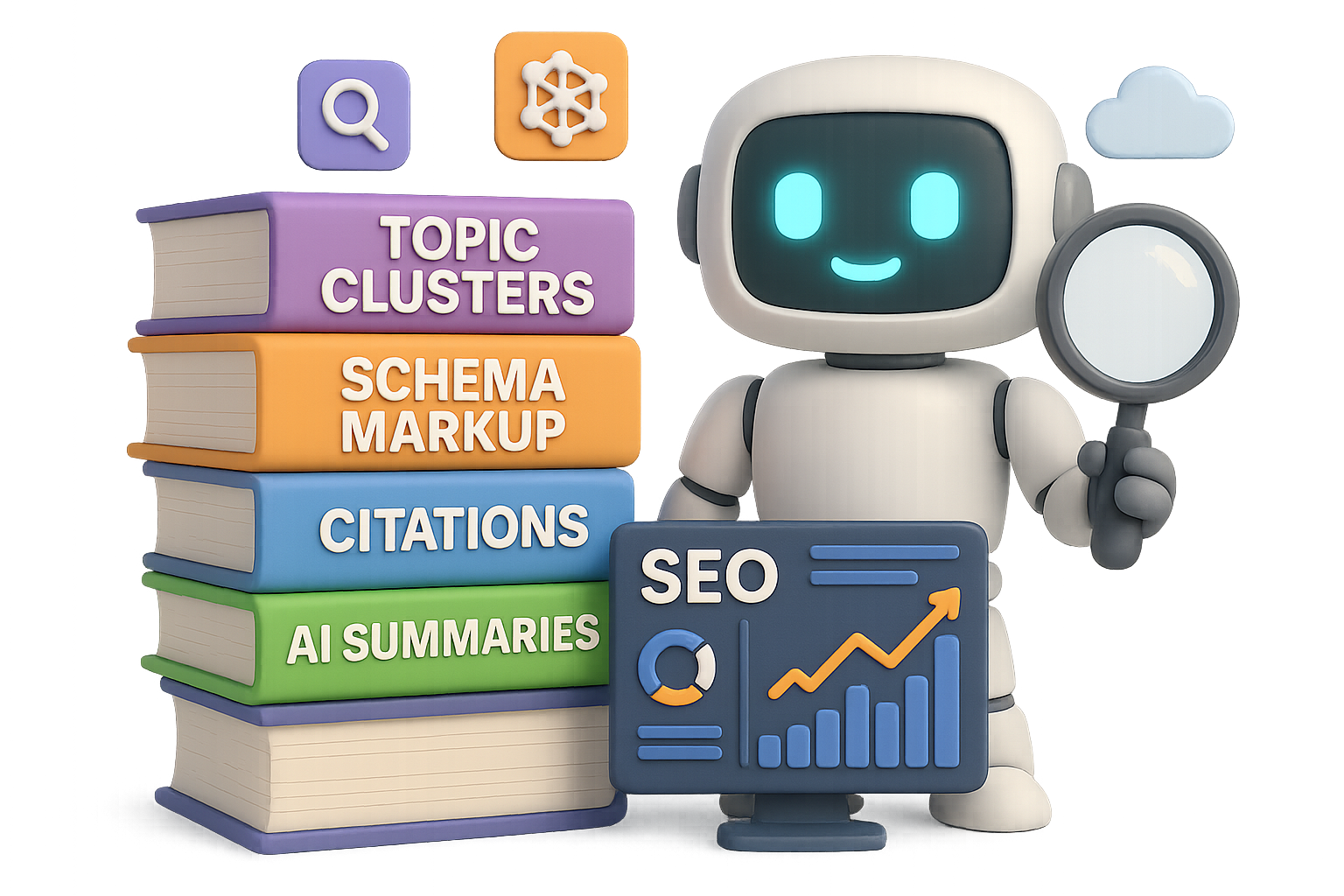
The Search Game Has Changed — Here’s How to Win in 2026
Let’s be real: those days of stuffing keywords, snagging backlinks, and watching rankings rise? Fading fast.
By 2026, large language models (LLMs) like ChatGPT and Gemini will answer most search queries before a human ever clicks your link. But don’t panic—this isn’t the death of SEO. It’s a major upgrade.
The brands that adapt now? They’ll lead the pack later.
In this post, you’ll learn five practical, data-backed moves to future-proof your visibility, traffic, and revenue in an AI-first search landscape.

1. Think in Topics, Not Just Keywords
Say goodbye to chasing exact-match phrases. Search engines (and AIs) now look for depth, not density.
Here’s how you stay relevant:
- Build pillar pages. Think: “Complete Guide to Running Shoes.”
- Link related sub-topics. Pages like “Trail Shoes,” “Overpronation Support,” and “Cushioning Myths” create a content cluster.
- Go semantically rich. Use tools like Surfer SEO or Google Natural Language API to find and weave in relevant terms—brands, biomechanics, surface types. No stuffing, just variety.
Why it matters: Google wants to see a full picture, not a single snapshot. Detailed, interlinked content tells algorithms, “Hey, I know this subject cold.”

2. Boost Your Authority—With Real Proof
Search engines are picky about who they quote. Great info helps, but trust? That’s what gets you featured.
Build your E-E-A-T (Experience, Expertise, Authority, Trust):
- Add author bios. Highlight credentials, experience, and a few war stories. Real faces > ghostwritten blurbs.
- Get cited. Appear on podcasts, write for respected blogs, get mentioned in news stories. Even unlinked callouts help your visibility.
- Stay consistent. Use the same name, photo, and tone across your blog, YouTube, LinkedIn, and more. That repetition trains the algorithms to recognize, remember, and recommend you.
Flip the script: it’s not who says it best—it’s who they trust to say it at all.

3. Write Content That AI Wants to Quote
AI search doesn’t scroll. It scans for summaries—and it loves content that gets to the point.
Want to be the answer, not just on page 7?
- Lead with the question, then pop the answer right after.
Example: “What’s the best SEO tool for beginners? Try Ahrefs, SEMrush, Ubersuggest, or Google Search Console.” - Use short paragraphs, bullet lists, and clear sub-heads.
They help both humans and LLMs get what they need, fast. - Mine the “People Also Ask” box.
Many of those Qs feed right into AI models. - Include hard facts and comparisons.
AI rewards clarity.
In one controlled test? Under 1% of users came from AI excerpt links—but they generated nearly 10% of total online revenue. Quality beats volume.

4. Make Your Pages Machine-Ready
You wouldn’t email your resume as a wall of text. So why do that with your blog?
LLMs read fast and skip faster. If your structure’s sloppy, you’re invisible.
Get your formatting game tight:
- Add schema markup: FAQ, How-To, Review—use it so AI knows what’s what.
- Go multimodal: visuals like tables, videos, and side-by-side comparisons win citations.
- Present data cleanly: numbered lists, stats in bold, clear comparisons. Lose the fluff.
This stuff isn’t busywork. Structured pages get more clicks, more quotes, and longer time-on-site. Everyone wins.

5. Build an SEO Workflow That’s Actually AI-First
Still relying on keyword tracking alone? You’re flying blind.
To compete in the LLM era, measure what really matters:
- Track citations.
Use tools like Ubersuggest’s AI Visibility report to see how often your content shows up in AI-generated answers. - Stress-test your content.
Drop drafts into ChatGPT or Perplexity. Ask for a summary. If your message gets muddled? Time to clean it up. - Develop signature formats.
Think frameworks, branded terms, or unique visuals that AI can latch onto and reuse. - Publish consistently.
Across all AI Overviews, from Google to OpenAI, blogs dominate citation share. And while traffic looks lower, conversion rates outperform—big time.
Carlos, a solo content creator with under 20K monthly sessions, added $1.2K in monthly revenue in 4 weeks by leaning into AI-friendly summaries. Small reach, smarter strategy.
Your Next Moves
AI isn’t replacing search. It’s reshaping it.
To win, you need:
- Topic depth, not just keyword density
- Authority that’s visible and consistent
- Fast, clear answers that AI wants to quote
- Machine-readable structure
- Tools that measure real visibility—not just rankings
🚀 Want to level up your AI search skills—without drowning in theory?
Check out Tixu—a beginner-friendly platform that teaches you how to master AI tools, train smarter prompts, and build workflows the modern web actually uses.
You’re not getting left behind. You’re just getting started.

Leave a Reply