
Is GPT-5 Really That Powerful? A First Week Reality Check
You’ve heard the buzz. “GPT-5 is here!” they said. “It’s a game-changer!” they claimed.
Now the dust has settled, and here you are—wondering if it’s worth the hype or just another model upgrade in a snazzy wrapper.
Let’s cut to it: GPT-5 isn’t a revolution. It’s a tune-up. But that tune-up? It’s smart, strategic, and surprisingly useful.
In this post, you’ll get a skimmable breakdown of what’s actually changed, what still stumbles, and why the upgrade might matter more than you think.

Skip the Model Madness
Let’s start with a quiet but powerful shift: no more picking models.
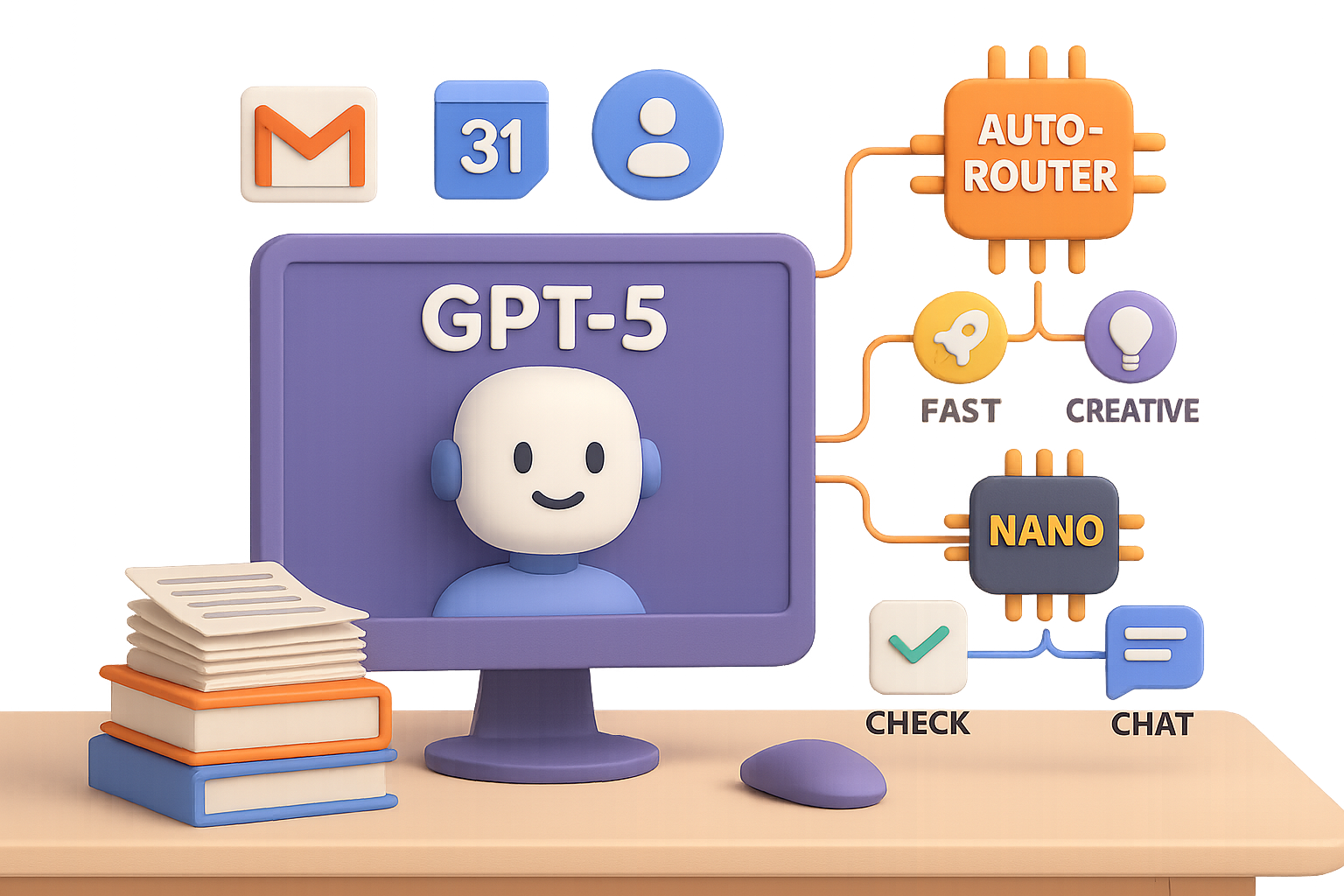
Forget debating between “Flash,” “Pro,” or “whatever’s cheapest.” With GPT-5, you get one unified experience—because there’s now a smart auto-router under the hood.
Why that’s a win for you:
- You stop guessing which model fits your task.
- OpenAI’s system routes quick asks to faster engines.
- Heavy hitters (like code, strategy, or research) get VIP access to beefier brains.
Bottom line? You just type. GPT-5 figures out the rest.
Call it frictionless thinking.

Your Inbox + AI, Finally Talking
If you’re a Pro user, here’s the big glow-up: GPT-5 now integrates with your Gmail, Google Calendar, and Contacts.
That means your chatbot can actually handle real-world tasks like:
- Summarizing that 37-message email thread you ignored all week.
- Drafting or scheduling a reply based on context.
- Finding calendar gaps and locking in a time.
- Pulling contact info—no tab-switching required.
Strangely, Gemini did it first—inside Google’s own ecosystem. But now that OpenAI has cut an OAuth deal with Google? You’ve got the same powers, with a way friendlier interface.
Real productivity, now in reach.

Turbocharged Context, Budget-Friendly Brainpower
Under the hood, GPT-5 comes with two moves that seem contradictory—but together, they’re clever.
- 256k-token context window
That’s more than 4x longer than what GPT-4 offered. Translation: you can now feed in full books, long transcripts, or complex documents without chopping them up.
- GPT-5 Nano
A smaller model trained for efficiency. Early tests suggest it’s cheaper than Google’s Gemini 1.5 Flash—and strong enough for everyday tasks.
So what you get is flexibility: bigger memory for deep work, lighter lift for quick wins.
Think of it as AI that scales to your to-do list.

But… Is It Actually Smarter?
Here’s where things get spicy.
OpenAI touts better reasoning and fewer hallucinations. But community reviews? Mixed bag.
You might notice:
- Cooler, corporate tone
GPT-5 sounds more neutral—good for fact-checking, not so great if you liked the playful GPT-4o vibe.
- Less creative spark… temporarily
Some early adopters said it felt “flat.” Turns out, the auto-router was misfiring on launch and sending creative prompts to the wrong engine. A fix is rolling out now.
- Better accuracy in specialty areas
If you’re asking about medical symptoms (not recommended), or debugging Google Apps Script, responses are noticeably sharper.
It’s not a brand-new brain. It’s a better driver behind the wheel.

Farewell GPT-4o
Fun fact: people got emotional when GPT-4o was quietly retired.
Yes, emotional—as in Reddit threads mourning its “warmer voice” and snappier charm. OpenAI heard the cries and rolled 4o back in as an option for now, while GPT-5 “develops its personality.”
Moral of the story? AI tone isn’t icing—it’s part of the product.
And if your assistant starts to feel like a teammate, expect folks to care when it changes tone overnight.

The Meme-Worthy Charts?
Let’s just say… not OpenAI’s brightest moment.
Their launch deck showed one graph where a score of 52 looked bigger than 69. Twitter exploded. OpenAI admitted the slides were built “late at night,” and yeah—it showed.
Irony alert: the model that’s supposed to reason better was introduced with a chart that couldn’t.
We’ll chalk it up to launch-week chaos. But next time? Maybe don’t eyeball the Excel bars.

So, Should You Care About GPT-5?
Here’s the twist: you’re probably already using it.
No opt-in, no big banner. GPT-5 rolled into the default experience for most users, quietly and completely.
And here’s what you get:
- No more model-picking headaches
- Ability to drop massive docs into chat
- Way more useful Google integrations
- A touch more logic, though maybe a little less flair
No, it won’t blow your mind. But it will save you steps—and maybe your sanity.
The Verdict
GPT-5 doesn’t scream “Next Era.” But it quietly upgrades the one you’re already in.
You might not notice the model switch. You will notice the smoother workflows, the tighter answers, the inbox handling itself.
Sometimes, progress doesn’t arrive in fireworks. Just fewer tabs and fewer clicks.
Ready to make moves with AI—without needing a PhD to start?
Check out Tixu.ai — it’s a beginner-friendly platform that helps you actually learn how to use tools like GPT-5 to get real work done.

Leave a Reply