
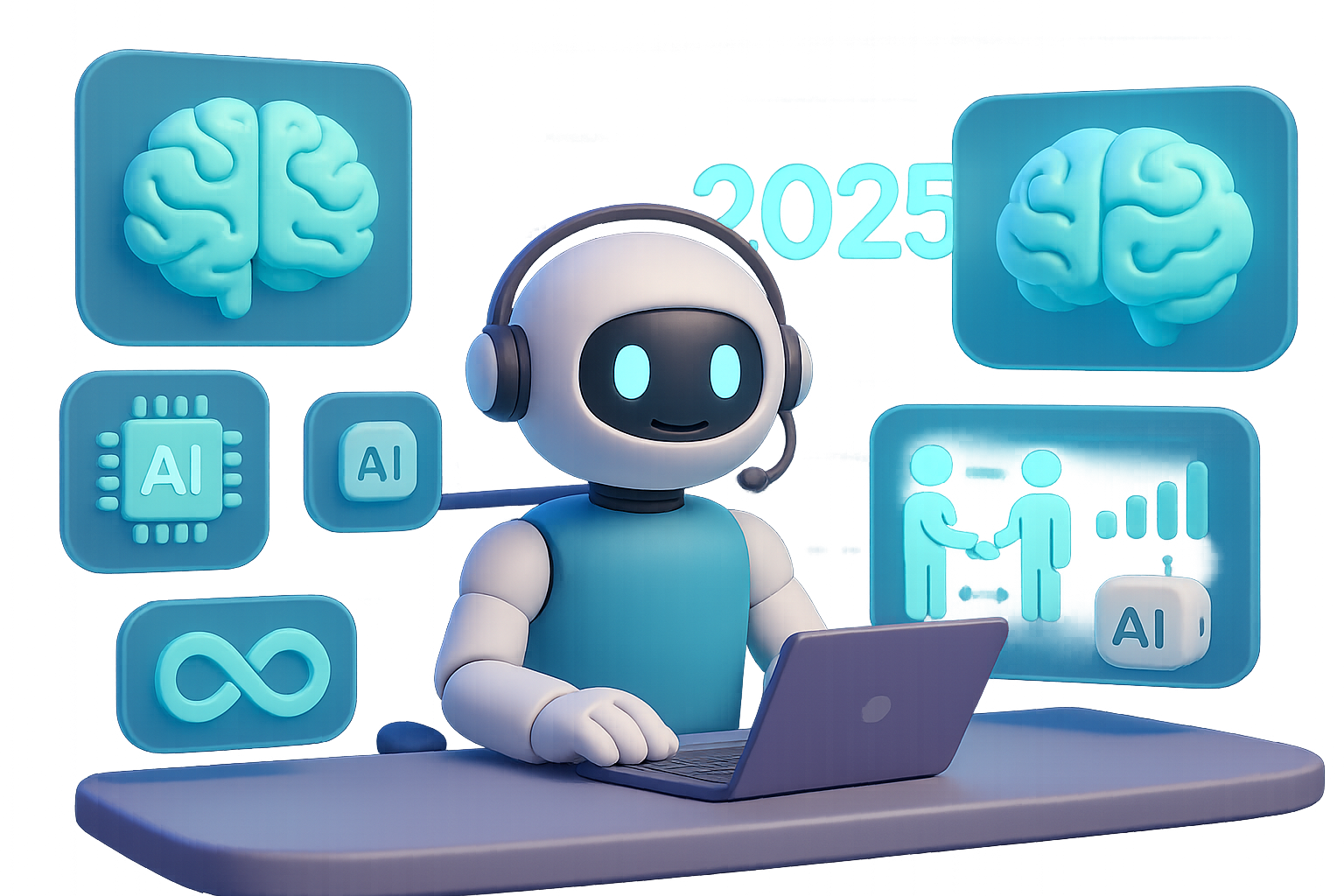
Forecasting AI: 7 Trends to Watch in 2025
AI isn’t just moving fast—it’s changing the rules in real time. If you’re building with it, managing it, or even just trying to keep up, you’ve got a front row seat to a tech revolution. But with so much noise out there, which shifts actually matter in the year ahead?
Good news: we’ve cut through the buzzwords for you. Based on field experiments, market signals, and a generous helping of nerdy joy here at Tixu, these are the 7 trends you’ll want on your radar as we roll into 2025.
Let’s break them down—and help you get a step ahead.

1. Agentic AI Gets to Work
Yes, agents have been the cool kids at the AI science fair for a while. But until now? Mostly flash, little follow-through.
2025 changes that.
Imagine giving an AI a goal—and it runs with it. Breaks the task down. Gets the right tools. Double-checks the output. Maybe even books the meeting room.
That’s what agentic AI promises, and we finally have the foundation to make it happen: better long-context models, improved multi-step planning circuits, and plug-and-play “tool aisles” for agents to grab what they need.
Ready when you are.

2. Smarter Thinking at Inference-Time
Models used to train hard, then coast. Now, they’re learning to think on the spot.
Welcome to Inference-Time Compute (ITC)—aka, a permission slip for your model to pause, reason, and use just enough brainpower for each task.
Why you should care:
- Upgrade quality without retraining. Fine-tune behavior on the fly instead of firing up another billion-dollar training run.
- Make agents reliable. Complex workflows finally get the attention they need to avoid silly failures.
This is how we build systems that adapt, not just predict.

3. Supersize Me: The Era of Very Large Models
1T was cute. 50T is coming.
From OpenAI, DeepMind, and the rest of the frontier crew, expect models in the tens of trillions of parameters. These juggernauts bring:
- Sharper reasoning. Less guesswork, more insight.
- Language fluidity across dialects and domains.
- Seismic infrastructure demands. (You’ll want newer, faster hardware—or a fat API credit.)
For most teams, though, the move will be to hosted access. Like leasing a Ferrari, not parking it in your garage.

4. Don’t Blink: Small Models Catch Up
Not every use case needs a Godzilla-sized model. In fact, some work better with smaller, faster, more focused AI.
Models in the 1B–5B parameter range (IBM’s 2B Granite series) now run smoothly on your laptop, your phone—heck, even your fridge if you’re creative.
Why go mini?
- Privacy perks—no cloud round-trips.
- Lightning-fast responses, even offline.
- Custom fits—think vertical AI for legal, security, HR, etc.
2025 will be hybrid: big brains on the cloud, laser-focused workers at the edge.

5. Enterprises Level Up Expectations
Last year, most companies used AI to route tickets, run simple chatbots, or automate help desk scripts.
Next year? They want more. Much more.
The wish list includes:
- Real customer support, not just button-clicking scripts.
- Self-healing networks that fix themselves overnight.
- AI-driven cyber defense that catches zero-days before humans blink.
It’s not sci-fi anymore—it’s a reflection of better models, human-in-the-loop design, and more confidence at the C-level.
Oh, and budgets to match.

6. Infinite Memory, Infinite Possibility
Remember the days when 4,096 tokens felt luxurious?
Now we’re working with hundreds of thousands—and early designs pushing into the millions.
What that actually means:
- Chatbots that remember your life story (and your Starbucks order).
- Knowledge agents that keep entire wikis in reference—no more “upload this again?”
- Fluid conversations that evolve over time, not restart every time.
But with great memory comes great responsibility: data governance matters more than ever. If your AI never forgets, compliance better not sleep.

7. Human-in-the-Loop, Rebooted
Slapping AI into a workflow doesn’t guarantee better outcomes. Don’t believe us? One study showed that doctors + LLMs performed worse than the LLM alone.
2025’s Human-in-the-Loop 2.0 will be smarter about collaboration:
- UI that explains model choices, so humans can spot-check on a dime.
- Feedback that actually trains the model, without waiting for the ML team.
- Built-in domain knowledge, so your legal AI speaks contract, not generic internet-speak.
It’s not humans vs AI. It’s humans + AI… done right.

8. Your Turn: What Did We Miss?
We’ve painted 7 of the strongest strokes—but you’ve probably got ideas we didn’t cover.
Synthetic data marketplaces? AI-designed chips? Autonomous legal advisors?
Let’s build a smarter, tighter AI future—together.
2025’s AI landscape is shifting fast—toward smarter agents, bigger brains, smaller deployables, and more collaborative workflows. If you’re not just keeping up but actively building, let these seven trends guide your playbook.
👉 Want to go from reading trends to building with them? Dive into tools, tutorials, and hands-on projects at Tixu.ai—the friendliest corner of the internet to start learning AI from scratch.

Leave a Reply