
OpenAI monetisation: from altruism to aggressive money-hunt
Worried your favorite AI sold out? You’re not alone. What started as a non-profit mission to “benefit all” now behaves a lot like a cash-hungry startup. That shift matters—because it changes pricing, partnerships, and the future of models you rely on.

See the cash burn
ChatGPT looks friendly. Behind the scenes, it costs a fortune to run. Estimates put OpenAI’s compute spend in the realm of billions per month. GPU commitments? Multi-year. Potentially eye-watering.
Compute costs per token are falling. Stanford HAI’s AI Index reports about $0.90 per 1M tokens today, down from $11 in late 2022. Great. But usage grows faster than costs fall. More users, more queries, more expensive models. That keeps the burn rate high.
Investors notice. Microsoft, Amazon, Nvidia and SoftBank poured roughly $110 billion into the space recently. As one analyst joked, that buys a few more months of electricity. Short, sharp. Reality check.
Understand the pitch that keeps cheques flowing
Four beliefs keep investors writing cheques:
- Explosive user growth—ideally with paying customers.
- Sticky subscriptions that survive price hikes.
- A credible path to AGI, with trillion-dollar upside.
- Continued frothy investor enthusiasm.
AI won’t replace you—someone better at AI will. If enough users lock into GPT-5/6, the playbook is simple. Win the market, then squeeze margins: raise prices, add ads, remove freebies. Compute costs fall; profits rise. Brutal, predictable.

Cracks in the story
Last month made the narrative fragile. Big headlines, bigger consequences.
- Ethics backlash
Anthropic refused a U.S. DoD drone request. OpenAI accepted a Pentagon partnership hours later. Users left. Some moved to Claude. - Switching is easy
Prompts, embeddings and fine-tunes now move between providers. Lock-in looks dated. - Talent drift
Seven-figure signing bonuses lure researchers away. Institutional know-how leaks. Commoditisation accelerates.
When anyone can fine-tune a frontier model in a spare bedroom, AGI as a moat starts to look like AGI as an open-source library.

Could an IPO break markets?
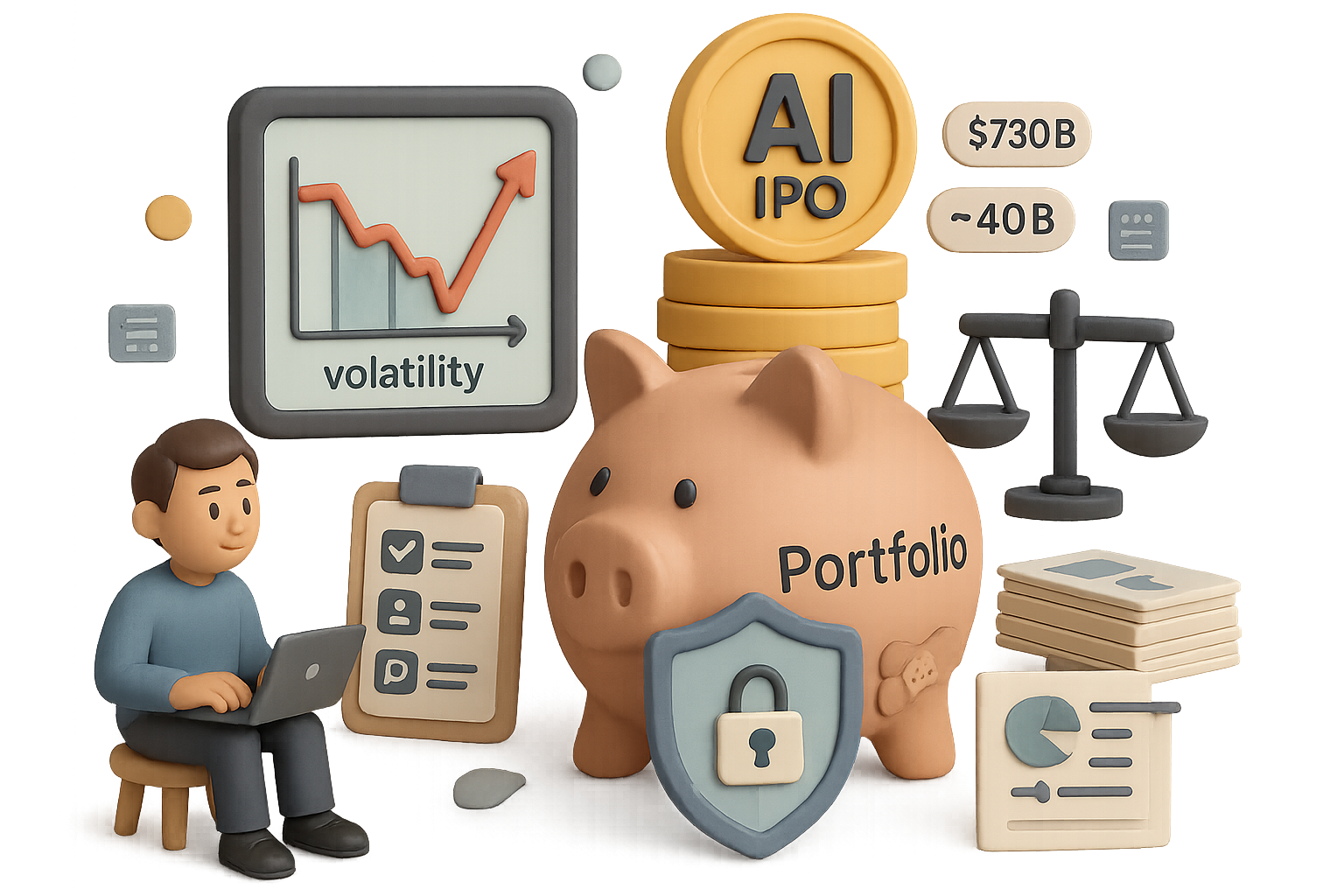
OpenAI’s private valuation sits near $730 billion—bigger than JPMorgan or ExxonMobil. If only 5% of shares float, that’s about $40 billion of new stock hitting markets at once. Add other big listings and you could see a supply shock.
That’s the worry: not just a bumpy debut, but a tidal wave of new equity that forces index funds to rebalance. In plain terms: billions in other stocks could get sold to make room for new AI paper. That drains liquidity across markets.

What this means for you
Do this next:
- Expect price volatility. Budget for sudden subscription changes.
- Stay model-agnostic. Build prompt pipelines you can swap in minutes. Tools like OpenRouter and LangChain help bridge providers. (OpenRouter converts requests; LangChain structures prompts.)
- Treat talent like hardware. Retention matters as much as GPUs.
- Watch regulation. If OpenAI goes public, AGI timelines will face SEC heat.

Numbers build trust—so here are the hard ones again
- Compute cost: ~$0.90 per 1M tokens today (Stanford HAI).
- Investor cash injection: $110B from major players.
- Private valuation: $730B.
- Potential float at 5%: ~$40B.
These figures explain why strategy changed. They also explain why you should plan for churn.

Tactical moves
- Audit your prompts. Identify provider-specific calls and abstract them.
- Add a fallback provider. Even a cheap, smaller LLM saves uptime risk.
- Track compute spend daily. Set alerts on cost-per-token spikes.
- Document knowledge. If researchers leave, your IP shouldn’t walk out the door.

Two-minute policy read
If OpenAI IPOs, expect more disclosure. They’ll publish forward-looking AGI claims. Regulators will parse those claims and respond. That means your contracts and compliance must adapt fast.
OpenAI’s pivot from idealism to aggressive monetisation changes pricing, hiring, and industry dynamics. Keep your product flexible, your budget realistic, and your people valued.
Want hands-on help learning practical AI skills and building model-agnostic systems? Try the beginner-friendly AI courses and labs at Tixu — beginner-friendly AI courses and labs — learn how to switch models, manage costs, and ship features fast.
Ready when you are.

Leave a Reply