
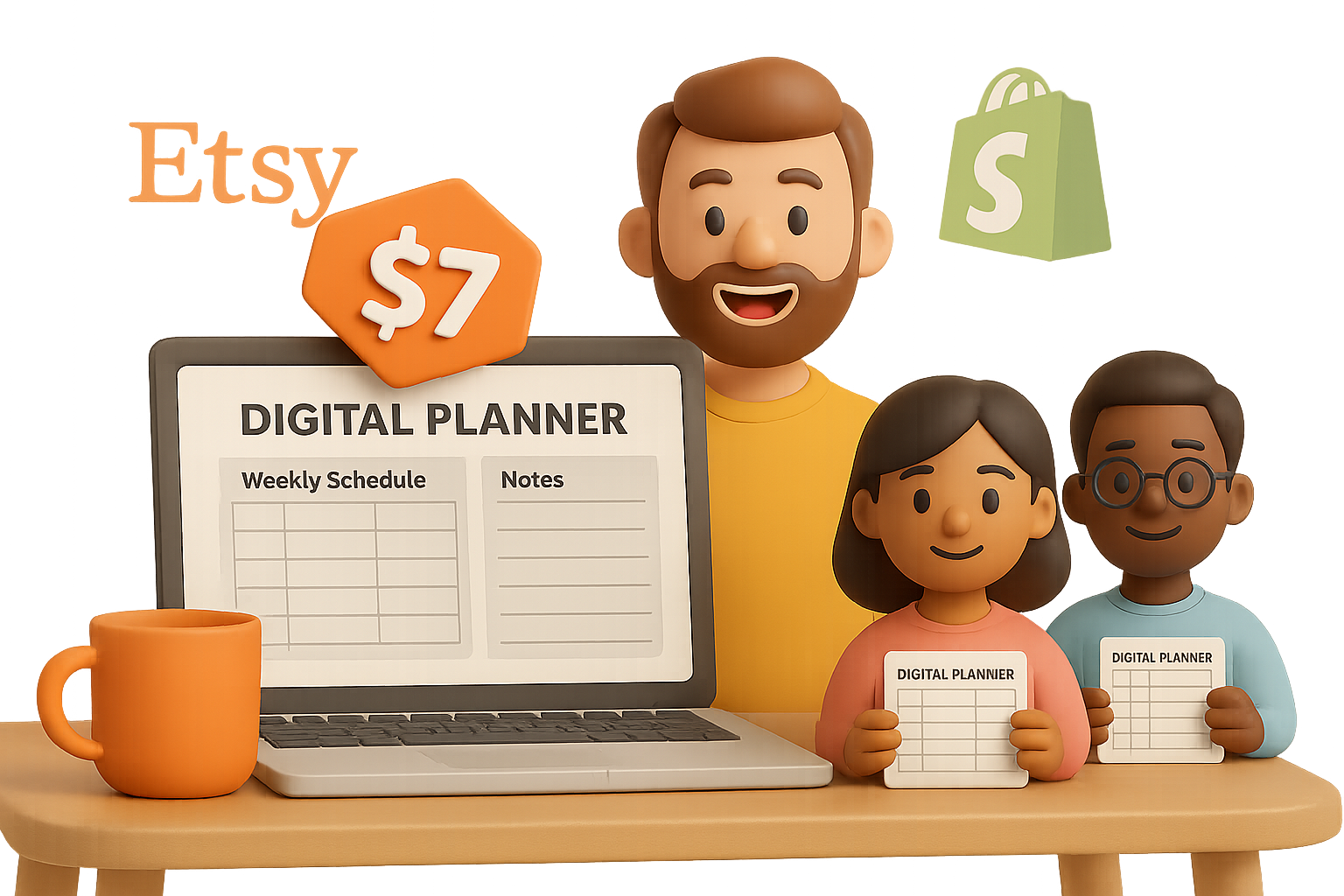
The $7 Template That Launched a Six-Figure Side Hustle
Ever feel like your 9-to-5 is draining the life out of you? You’re not alone—and you’re not stuck.
One Saturday morning, fueled by coffee and a 2-hour window before brunch, someone opened Canva, whipped up a digital planner, popped it on Etsy for $7, and forgot about it. A few days later? That first sale was more than a payday—it was a portal.
Fast-forward: that $7 product turned into a thriving six-figure business. No paid ads. No fancy tech stack. Just scrappy execution and smart pivots.
Here’s how it happened—and how you can duplicate (or course-correct) your digital product hustle.

From “Dream Job” to Burnout Mode
LinkedIn tells one version of the story. The truth? Whole different vibe.
Behind the polished profile: solid pay, steady promotions, and a London zip code came with crushing anxiety and burnout. The real wake-up call? A panic attack mid-Tube ride to a client meeting. And if your first thought after fainting is “Did someone send the slides?”—yeah, it’s time for a change.

Where Side Hustles Went to Die
Plenty of trial. Even more error.
- Dropshipping: Facebook ad money, gone. Orders? Zero.
- Amazon FBA: supplier nightmares and warehouse purgatory.
- Fiverr, forex trading, even a hair-extensions brand—all flops.
The hard truth? Low-startup doesn’t mean low-effort. If your hustle burns resources faster than it builds results, it’s not the one.

Why Digital Products Just Work
Here’s why digital goods hit the sweet spot:
- No shipping. No stockroom.
- Near-zero overhead (Canva Pro = ~$10/month).
- Delivery’s instant and automated.
- Global reach from day one.
So when Etsy came on the radar, it felt like alignment. The platform’s built-in traffic meant potential eyeballs without learning SEO from scratch.
Then came the crash course.
First Flop, First Win
Test #1: downloadable wall art. Weeks of effort, six months live, zero traction.
Test #2: a self-care planner designed specifically for women. Boom—first sale. Confidence grew. Variations came next. Sales followed—$17k in four months, to be exact.
One niche. One shift. Total trajectory change.

Etsy’s “Oops, All Algorithms” Problem
The good:
- Existing shoppers = faster validation
- Easy storefront setup
The ugly:
- Copycats clone listings pixel-for-pixel overnight
- Race-to-the-bottom pricing wars
- Algorithm shifts nuke rankings without warning
When a $22 planner was undercut to $0.99 by copycats, it became very clear: Etsy growth hits a ceiling fast.

Taking Control: Shopify for the Win
Moving operations to a Shopify site flipped the switch:
- Full pricing control
- Own your customer email list (goldmine)
- Total freedom over brand voice, upsells, and product bundles
The new marketing mix? Less reliant on viral trends, more focused on sustainable channels.
- TikTok Lives worked—but drained energy.
- Pinterest, on the other hand, delivered consistent traffic—no dancing required.
Three steady months of pinning = higher sales than the old paycheck.

Redundancy, But Make It A Promotion
Just as the shop’s revenue passed “day-job salary” levels, HR came knocking with a restructuring offer. Translation: take the redundancy package or stay on sinking sand.
Spoiler: the package won.
Seven months later? The digital product biz crossed an $18,000 month—no commute, no manager pings, no Sunday Scaries.

Real-Life Upgrades > Fancy Metrics
The wins weren’t just financial:
- No more desk on Fridays—three-day weekends are default now.
- Bye-bye begging HR for time off.
- Creativity feels fun again, not forced.
- Customer emails come with photos: weddings planned, businesses launched, therapy goals tracked using the planners.
That’s ROI you can feel.

5 Stealable Lessons You Can Use Now
- Niche beats broad.
You’re not building for “everyone.” Go specific—think teachers with ADHD, new parents balancing freelance gigs, or wedding planners who hate spreadsheets. - Own your platform.
Etsy is for testing. Shopify (or Podia, or Gumroad) is for scaling how you want. - Multiply your traffic.
Pinterest + TikTok is a killer combo, but you only need two platforms to move the needle. Don’t go wide—go deep. - Speed wins.
That $7 template was whipped up in under two hours. Don’t over-edit. Post it. Use buyer feedback to improve v2. - Automate revenue.
Set up email flows, bundles, lead magnets. Tools like ConvertKit or Flowdesk + basic AI chatbots = 24/7 selling machine without constant handholding.
Your 10-Minute Starter Plan
Want to follow the playbook? Here’s your quick-start checklist:
- Jot down one clear, real-life problem someone would pay ~$5–10 to fix
- Open Canva, grab a template, and personalize it (colors, fonts, vibe)
- Export a high-res PDF. Upload to Etsy and write a pain-point-packed description
- Price low to test. Use wins to justify leveling up
- Meanwhile, start building a Shopify or Squarespace store
- Set up a Pinterest account, batch-create 5–10 pins, and schedule them out
- Collect every buyer email. Use them to educate, upsell, and nurture superfans

Final Take
The biggest shifts don’t always look dramatic. Sometimes they sound like a $7 sale notification.
If you’ve ever wondered if digital products could change your life—you’ve got your answer. They can. You just have to start.
Want a beginner-friendly way to learn the AI tools that can turbocharge your digital product hustle? Try Tixu — a hands-on platform for leveling up with AI, even if you’re starting from zero. Ready when you are.

Leave a Reply