
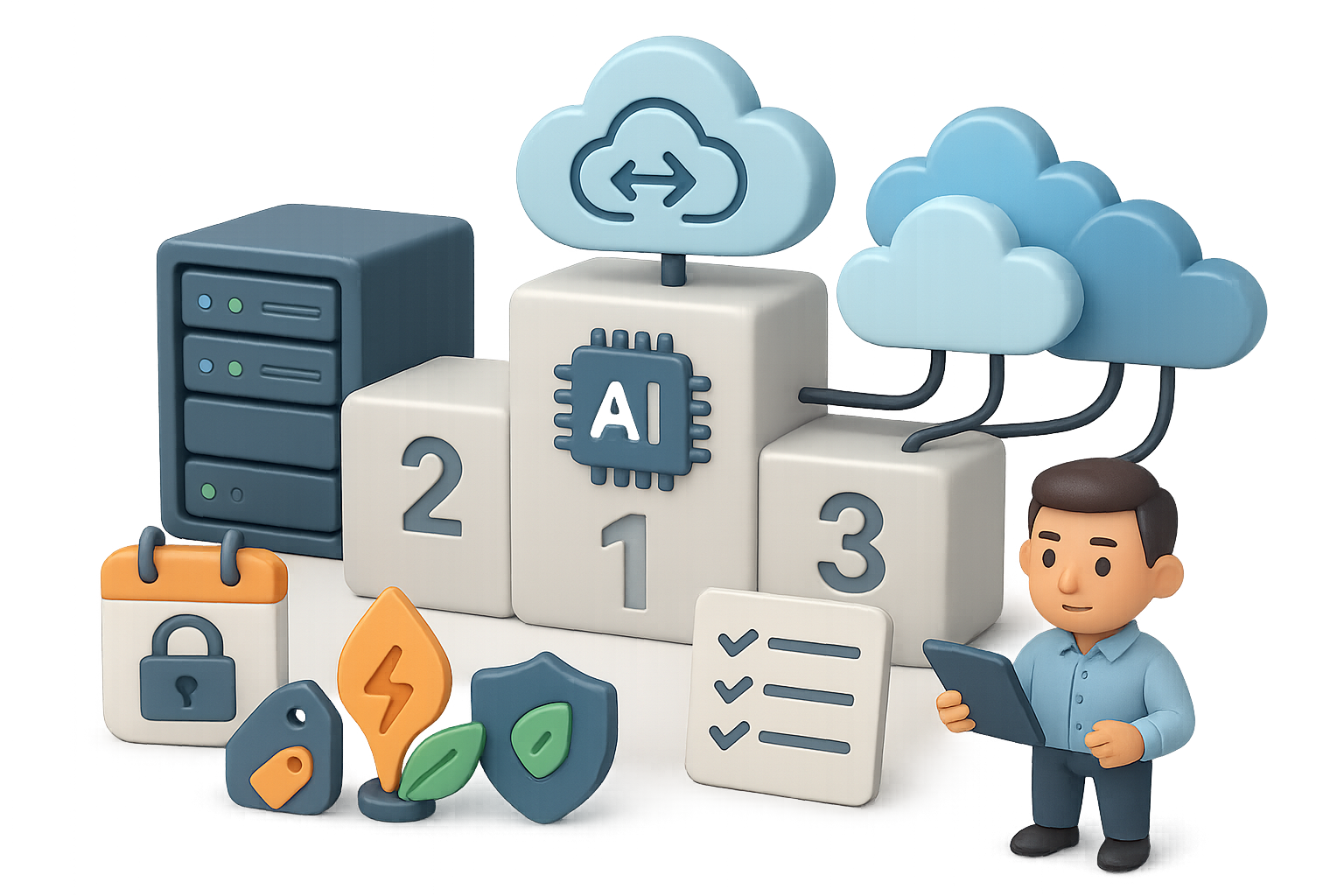
AI infrastructure just became the battleground
$110 billion. That’s the size of the deal OpenAI just signed with AWS, NVIDIA and SoftBank. Big number, bigger signal: AI stops being a software-only story and starts acting like power or bandwidth. Compute, energy and distribution win the day. Software becomes the table-stakes.
If your roadmap still treats AI like a feature toggle, this post fixes that. Ready when you are.

What the $110B deal actually means for AI infrastructure
- AWS wins third-party cloud distribution rights for OpenAI’s next “frontier” platform.
- OpenAI commits to a multi-gigawatt expansion—think entire data-center footprints, not just more racks.
- NVIDIA supplies the specialized silicon; SoftBank adds capital and reach.
- Microsoft Azure stays a partner, but the supply chain just diversified.
AI isn’t just a cloud vendor decision anymore—it’s a geo-economic play. Control of where models run becomes strategic leverage, not just a procurement checkbox.

Three shifts that reshape your roadmap
- AI now finances itself.
Capital flows into OpenAI → OpenAI orders GPUs and cloud capacity → partners scale facilities and reinvest. It’s a self-reinforcing flywheel—faster than past infrastructure builds—and it changes who sets prices and who owns customer touchpoints. - Inference is where the money and risk live.
Training headlines forges headlines. Inference pays the bills. Every query costs compute. The cloud that owns inference owns the runtime relationship with your users. Expect providers to optimize for latency, throughput and per-call economics like their lives depend on it. - Optionality becomes leverage.
Spreading commitments gives negotiating power. Optionality keeps margins healthy and dependency low. That’s a play every product leader should copy.

What this means for your next 90 days
Treat cloud choice like a strategic product decision. Here’s what to do.
- Elevate cloud selection to the boardroom.
Latency, regional coverage, SLAs and pricing tiers decide whether features ship. Put product, finance and IT in the same room and make the call together. - Design for portability and multi-cloud fail-over.
Don’t lock to a single runtime. Use containerized workloads and orchestration so you can redeploy quickly. (Kubernetes manages containers; Terraform or Pulumi codify infra so you can reprovision elsewhere.) - Budget inference as recurring spend.
Pilot runs hide the real bill. Model daily, weekly and seasonal usage, and build guardrails for runaway GPU costs. - Lock capacity when the market is calm.
Long-term reservations or capacity contracts prevent last-minute shortages and price spikes. Think of this like reserving power on a grid. - Track energy and sustainability metrics.
Multi-gigawatt facilities attract regulatory and public scrutiny. Customers and investors watch carbon impact; align with providers investing in renewables.

Concrete checklist: do this next
- Run a 30-day usage forecast that includes peak-day inference.
- Convene a short cross-functional review (product, finance, ops) and pick primary + failover clouds.
- Start a portability pilot—containerize a key inference pipeline.
- Ask current vendors for capacity reservation options and benchmark pricing for guaranteed throughput.
- Add energy and emissions KPIs to vendor scorecards.

Quick knobs and tools
- Containers + Kubernetes: run models anywhere.
- Terraform / Pulumi: keep infra reproducible.
- Cost-exporting metrics: feed daily GPU spend to finance dashboards.
- Region-aware routing: move inference to lower-latency zones when necessary.

Two quick myths, debunked
- Myth: “We can wait—AI costs will drop soon.”
Reality: Capacity constraints and demand spikes make timing risky. Early reservations are defensive. - Myth: “AI is a dev problem.”
Reality: Inference is a business model problem. Product, finance and ops share the risk.

Why winners will pull ahead in 12 months
Infrastructure reshuffles are rare. Those who secured telegraph lines, fiber, or spectrum early gained outsized returns. The AI compute rails are being laid now. Whoever controls those rails influences pricing, availability and innovation velocity for years. Move decisively, and you make your platform the path of least resistance for customers.

Key takeaways
- AI = infrastructure. Budget, govern and reserve it like power or bandwidth.
- Cloud choice is strategic. Optimize for portability, leverage and capacity guarantees.
- Act before scarcity bites.
Your one-sentence next step: run a 30-day inference forecast, then secure at least one capacity reservation. Do it this week—don’t be the team that “wishes it had” when demand spikes.
Want to get comfortable with the basics of building and operating AI systems? Tixu — a beginner-friendly AI learning platform that teaches practical skills for product and engineering teams.

Leave a Reply