
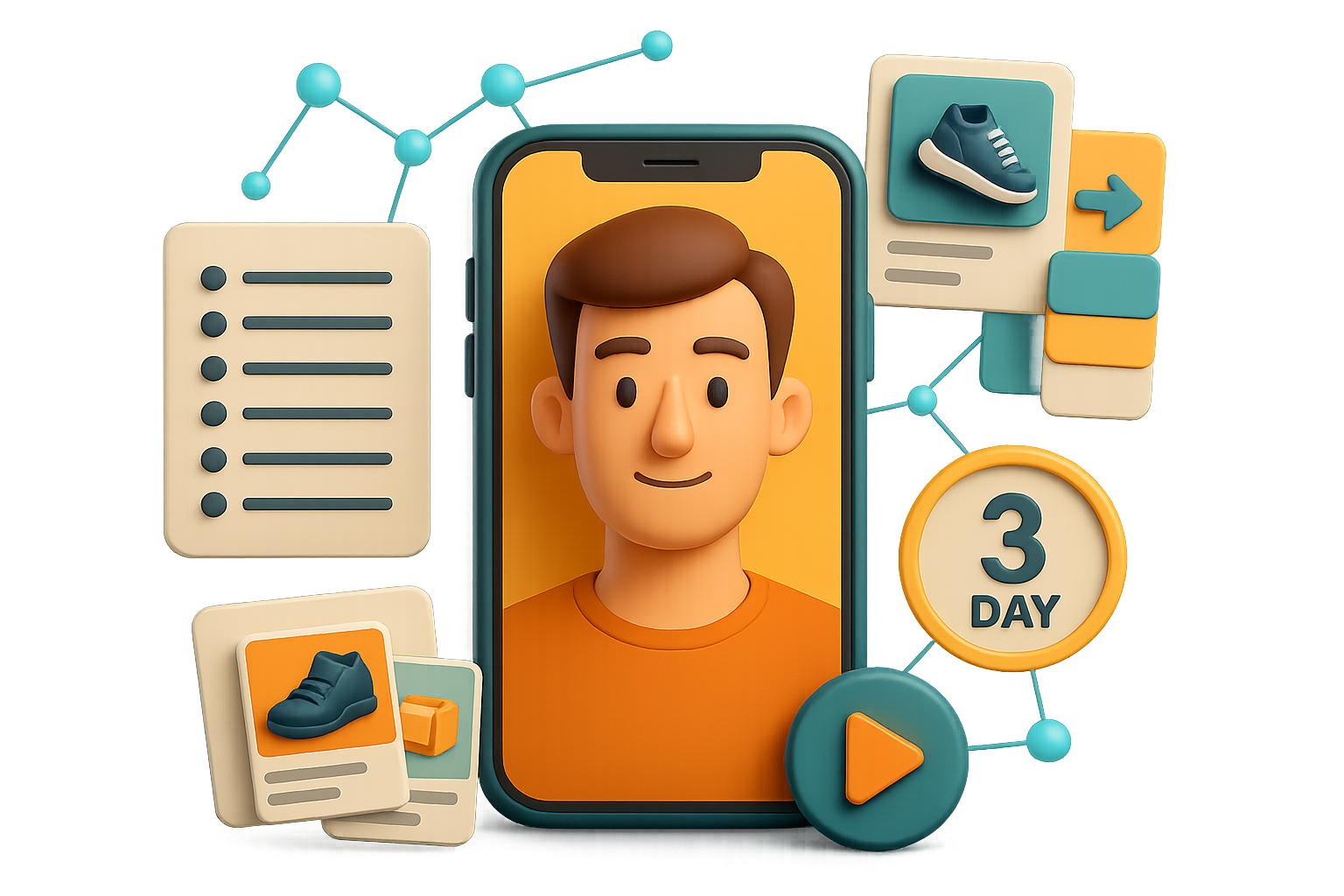
Turn Scroll-Stoppers Into Shoppers: A Practical Playbook for AI-Generated Ads
You lose attention in three swipes. Your creative doesn’t have to. Here’s a simple, repeatable system that gets you influencer-style vertical videos that look human, rack up views, and—most importantly—move product. No camera kit, no actor bookings, and no five-figure shoots. Just a repeatable workflow you can scale.

What you’ll walk away with:
A 7-step pipeline for photoreal persona creation, still-to-video generation, and rapid variant testing. Roadmap: build a persona, craft the perfect first frame, generate a photoreal still, animate, then iterate. Expect to shave weeks off production time and spin up A/B-ready creatives in minutes.

1. Create a Consistent On-Screen Persona
- Make one digital ambassador. Reuse them everywhere.
- Find a natural headshot on Pinterest that matches your customer vibe. Skip airbrushed stock.
- Turn that shot into a multi-angle reference set with ImageFX (Imagen 2) via your Gemini account or a wrapper like Higgsfield.ai.
- Save 4–6 angles. These become your brand’s forever face.
Why it matters: consistent faces increase trust and click-through. Brands that standardize visuals report faster creative learning and cleaner A/B data. Feed these headshots into every prompt for continuity across ads, thumbnails, and product pages.

2. Nail the First Frame that Stops the Scroll
The start frame decides whether someone watches.
- For fashion, grab a mirror-selfie frame. For gadgets, screenshot a top-performing TikTok Shop clip on Social1.io.
- Match camera angle, lighting, and environment. Save the reference.
A strong first frame halves your guesswork when you storyboard. Short contrast: a boring opener loses—you don’t.

3. Collect Sharp Product Assets
Pixels equal believability.
- Use the highest-res product photo you can find.
- If you’re practicing, pick a viral item from CaliData and download the image.
Sharper product photos make fabric, texture, and details read better in the generated video. That matters for conversions.
4. Let an LLM Draft Your Image Prompt
Stop typing adjectives and start prompting smart.
- Paste persona headshots, product images, and your scene reference into ChatGPT or Gemini.
- Ask for a detailed ImageFX prompt that replaces the original model with your persona and specifies pose, clothing, and camera distance.
Edit the output. Tiny omissions—like “no shoes”—haunt the final render. Expect to iterate once or twice.

5. Generate a Photoreal Still (Your Key Art)
This is the ad creative you’ll animate.
- Upload: persona headshots, product photo, scene reference.
- Paste the refined prompt into ImageFX or your Imagen wrapper.
- Batch 3–4 images, set 9:16 aspect ratio, and 4K quality for Reels/TikTok.
Pick the most convincing frame. This is your “key art” for the clip.

6. Animate the Still with Kling 3.0
Turn a photo into buttery motion.
- Upload the chosen still to Kling (Model 3.0).
- Ask an LLM for a second-by-second Kling script for an 11-second clip. Example: “Girl records herself in a mirror, turns slightly to show trousers, no dialogue, natural movement.”
- Generate with native audio disabled to save credits.
Result: a vertical clip with subtle camera jiggle, fabric movement, and believable eye-lines. Expect about 2 minutes to render.
7. Iterate Rapidly with Kling Omni
Variants = more learning. More learning = better performance.
- Open your finished clip in Kling Omni.
- Swap the trousers image for a new color or style.
- Regenerate to produce A/B-ready variants with the same movement and lighting.
You maintain motion fidelity while producing multiple creatives in minutes. Early users report a ~60% faster creative cycle and stronger test signal when using consistent motion across variants.

8. Upload, Measure, Repeat
Don’t ship and forget.
- Push to TikTok, Instagram Reels, YouTube Shorts.
- Test 2–3 variants per ad set.
- Measure CTR, add-to-cart, and ROAS. Pause the losers fast.

Checklist: From Idea to Viral Ad
- Persona headshots (ImageFX)
- Scene reference (Pinterest / Social1)
- Product photo (high res)
- Prompt drafting (ChatGPT / Gemini)
- Photoreal still (ImageFX)
- Motion clip (Kling 3.0)
- Variant swapping (Kling Omni)
- Upload + test on socials
Do this next
- Pick one product.
- Create one persona and three variants.
- Launch one A/B test this week.

Quick tips and tradeoffs
- Keep clips short. 9–11 seconds often win for product reveals.
- Disable synthesized voices unless you need them. Native audio eats credits and attention.
- Use the same lighting and movement across variants to isolate product differences.

Source shortcuts
- Gemini (Google) for ImageFX prompts.
- Higgsfield.ai if you don’t have direct ImageFX access.
- Social1.io for top-performing TikTok references.
- Kling.ai (Kling 3.0 / Omni) for motion.
- CaliData for viral product discovery.
One persona, one key art, fast animation, rapid variants—turn scroll-stoppers into shoppers. Ready to level up your AI creative? Learn practical prompts, platform tactics, and beginner-friendly exercises at Tixu.ai. Start learning and ship your first AI ad today.
Ready when you are.
Leave a Reply